


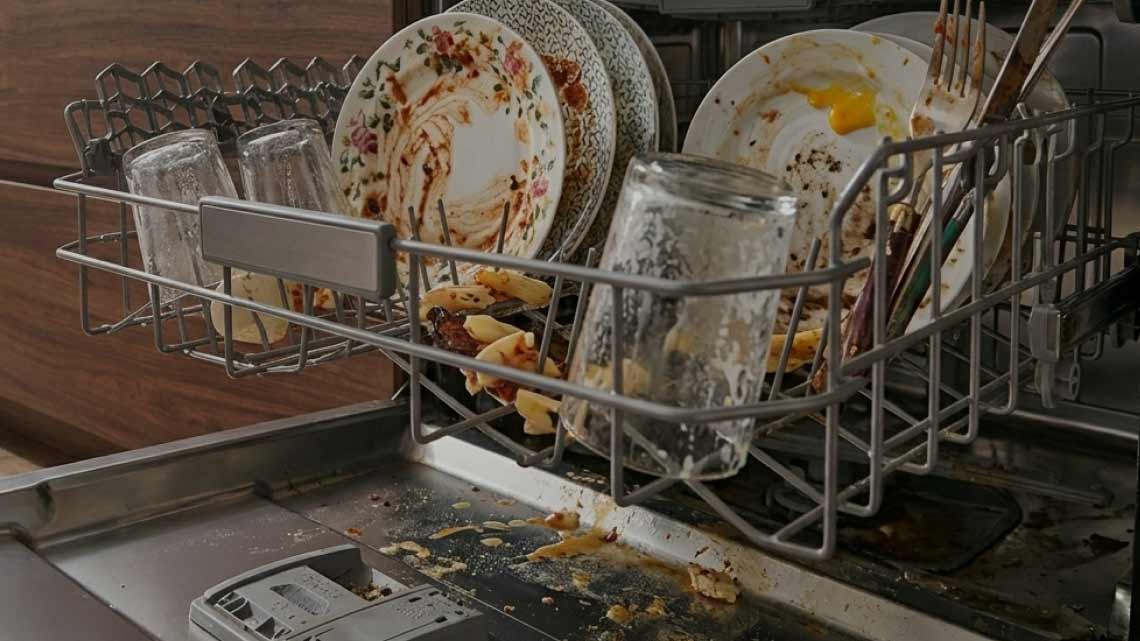
Nothing quite like unloading a dishwasher that ran for an hour and a half, only to find plates coated in yesterday’s spaghetti sauce and glasses foggy with something you can’t identify. Or worse — bits of oatmeal welded onto the bowl from breakfast. Two possibilities at that point: put everything back in and run another cycle (waste of water, waste of an hour), or figure out what the machine is actually doing wrong.
Bad news, sort of: there’s about eight legitimate reasons a dishwasher stops cleaning properly. Good news: five of them are homeowner-fixable in under thirty minutes, and one of them is honestly just loading habits. The remaining two are actual repair situations where an appliance fix Jacksonville FL technician can be at the door the same day and diagnose in under twenty minutes. Below is how to figure out which category yours falls into.
Schedule your appliance repair today!
1. Before Anything Else: Water Temperature
Genuinely surprising how many «dishwasher not cleaning» complaints trace back to this one variable. Dishwashers need incoming water at 120°F to work properly. Modern detergents are formulated for hot water — they don’t activate at lukewarm temperatures.
Fastest way to check: run the hottest tap at your kitchen sink for a minute. Feel it. If it’s not hot enough to make you pull your hand back, your water heater is set too low or too far away from the kitchen. Bump the water heater up to 120°F. That alone fixes maybe 15% of the «not washing» calls we take.
Related trick: run the kitchen tap hot for a full 30 seconds before starting the dishwasher. That way the cycle begins with hot water in the line rather than the cold slug that’s been sitting in the pipe.
2. Loading Wrong — More Common Than Anyone Admits
Nobody wants to hear that their loading technique is the problem. But if the dishwasher was cleaning fine and then gradually started missing spots, this is worth thinking about first. Water needs to reach every surface. If you nest bowls together, stack plates too close, or block the upper spray with a tall pan, water can’t hit dishes on the other side. Detergent particles hit the barrier and never make it to the load beyond.
Quick loading fixes people ignore:
- Bowls facing down and slightly angled, never nested
- Plates in the lower rack facing the center (spray comes from below)
- Nothing in the lower rack should block the tower going up to the top spray arm
- Tall items on the sides, not blocking the middle
- Utensils split between compartments — clumping means bad cleaning
Test whether loading is the issue: pull half the dishes out, run a load, see if the remaining half comes clean. If it does, you were overloading.
3. The Filter Problem, Again
Every dishwasher problem article eventually gets here because the filter is behind so many issues. Bosch, Miele, KitchenAid, Whirlpool, GE, Frigidaire, Samsung, LG — modern dishwashers on all these brands have a removable filter at the bottom of the tub. Filter’s job is catching food particles so they don’t recirculate. When packed with old food, water flowing through it slows dramatically. Slower water = weaker spray = dishes not getting clean. The same filter that causes smells causes weak cleaning.
Twist counterclockwise, pull out. Hot water in the sink, dish soap, old toothbrush for the crusted parts. Ten minutes tops. If yours hasn’t been cleaned in over a year, expect it to look nasty enough that you’ll question your life choices. Reinstall, run a hot cycle empty to test.
4. Spray Arms Not Spinning or Spraying
Spray arms rotate under water pressure. If food debris blocks the tiny holes drilled along them, water can’t shoot out properly. Sometimes the arms don’t even rotate because the pressure dropped too low, which means half your load never gets water hitting it at all.
Take both arms off. The top one usually twists off. Bottom one lifts. Hold each up to a light. Every hole should be clear. Any that’s clogged, poke through with a wooden toothpick. Rinse arms under hot water and reinstall. Give the top arm a spin by hand after reinstalling. Should turn easily with no wobble. If it’s stiff or catches, the bearing may be worn — that’s a replacement part, not a cleaning fix.
5. Detergent Doing Nothing
Two independent problems here.
- Wrong detergent or bad detergent. Powdered detergent absorbs humidity and loses effectiveness over months. If your box of powder has been open under the sink since last spring, it’s probably weak. Same with tablets in humid climates like Florida — they can absorb moisture through the plastic wrap and clump up. Switch to fresh detergent from a sealed package. Also worth trying a rinse aid if you’re not already using one — cuts the water and helps dishes dry without spots.
- The detergent dispenser stuck closed. The dispenser door is supposed to spring open at the right moment during the cycle to release detergent. If it doesn’t open, all your detergent stays trapped in the dispenser and nothing gets released. Check after a cycle — if the little door is still shut with detergent inside, the dispenser mechanism is failing. Sometimes it’s just gunked up with old detergent residue (wipe clean, try again). Sometimes the spring is broken (replacement part).
6. Hard Water Is a Silent Killer
Florida water is hard. Really hard in some areas — up to 220 ppm hardness in parts of Jacksonville. Hard water leaves mineral deposits inside the dishwasher over years, coats heating elements, clogs spray arm holes with limescale, and reduces detergent effectiveness dramatically.
Signs your dishwasher is fighting hard water:
- White film on glassware after cycles
- Cloudy dishes even after multiple runs
- White crust visible around the heating element
- Detergent tabs not fully dissolving
Short-term: run a citric acid cycle (or vinegar, though citric acid is stronger). Sprinkle 3-4 tablespoons of citric acid powder in the bottom of an empty dishwasher, run a hot cycle. Dissolves limescale. Do it every 2-3 months as maintenance if you’re on hard water.
Long-term: water softener for the house, or at minimum a dedicated dishwasher salt (Finish makes one) if your dishwasher has a softener compartment (most European brands do — Bosch, Miele, Beko).
7. Circulation Pump Weakening
Getting into repair territory now. The circulation pump is what actually pushes water through the spray arms during the wash cycle. When it starts to fail, spray pressure drops even though everything else looks fine — filter clean, arms clear, detergent working. Dishes come out with faint residue instead of visibly dirty because there’s still some water spray, just not enough to properly blast off food.
Symptom is usually gradual: dishes were coming out fine, then they started needing a re-run sometimes, then re-running became normal. Slow decline over months.
Not a homeowner repair. Testing requires pulling the dishwasher out, accessing the pump underneath, and either checking pressure with a manometer or measuring pump motor current draw. A Jacksonville appliance repair technician handles this diagnosis in fifteen minutes.
8. Water Inlet Valve Slow or Failing
A water inlet valve is what lets water into the dishwasher at the start of each cycle. When the valve wears out, water fills too slowly — the machine starts the wash phase with less water than it needs. Reduced water volume means weaker spray, means dirty dishes.
Symptom: cycle takes noticeably longer than it used to, or you hear water still trickling in during phases when the machine should be washing rather than filling.
Also a tech job, since it involves shutting off water, disconnecting supply lines, and swapping the valve.
When to Call a Pro
Filter, arms, loading, detergent, water temperature — all DIY. If you’ve worked through those and cleaning is still bad, that’s when a high-rated appliance repair company is worth the visit. Circulation pumps and water inlet valves are common failures on dishwashers past 6-7 years of age. Both are repairable, both are worth fixing on a machine that’s otherwise in good shape.
Brands we handle regularly for cleaning issues: Bosch, KitchenAid, Whirlpool, GE, Frigidaire, Samsung, LG, Kenmore, Maytag, Miele, Amana, Jenn-Air, Beko, Fisher & Paykel, Viking.
Name: Appliance Repair Jax
Adress: 164 Johns Glen Dr, Jacksonville, FL 32259
Phone: (904) 200-4110
Website: https://appliancerepairjax.com/
Conclusion
Dishwashers that stop cleaning properly rarely need major work. Usually the fix is filter, loading habits, water temperature, or hard water treatment. When it does turn out to be a pump or valve, that’s when replacement parts and diagnostic tools are called for. Appliance Repair Jax covers dishwasher cleaning issues across Jacksonville, mainstream and premium brands both, with technicians who can diagnose whether the problem is truly mechanical or something a scrub brush handles.
