


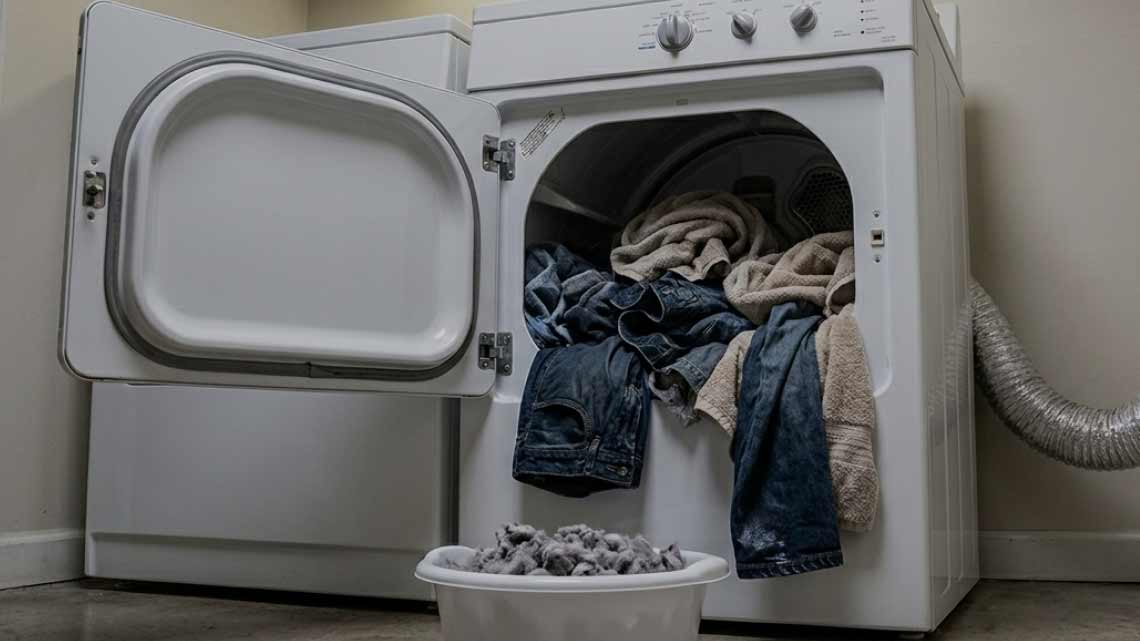
You pull a load out of the dryer and start folding. Towel’s warm — great. Next one’s… damp at the corner. T-shirt feels mostly dry, but the seams under the arms? Still soggy. A pair of jeans you swear ran for 70 minutes? Wet pockets, wet waistband. What in the world is going on? This is a different complaint than “my dryer takes too long.” What you’re describing is uneven, incomplete drying — the dryer runs full cycles, gets hot, but clothes don’t come out properly dry. It’s one of the more frustrating things to diagnose, and we get tons of home appliance repair Jacksonville FL service calls that start with exactly this kind of weird-pattern complaint. Let’s break down what’s actually happening there.
Drying Is Two Jobs at Once
Quick refresher: your dryer doesn’t “dry” anything directly. It heats air, blows it through the drum, picks up moisture, pushes humid air outside. When clothes come out unevenly damp, one of those three steps is fumbling: not enough heat, not enough airflow, or the sensor cutting the cycle too soon. Each gives different symptoms.
Schedule your appliance repair today!
What’s Actually Going Wrong
1. Moisture sensors that have gone blind
This is suspect number one when your dryer is not drying clothes well on auto-dry cycles. Inside the drum, near the lint trap opening, there are two thin metal strips — the moisture sensor bars. They read how wet clothes are by sensing electrical conductivity. Problem? Fabric softener residue builds up on those strips, and once coated, they basically tell the control board “yep, all dry” after just a few minutes. Cycle ends. Clothes come out half-wet. Wipe the bars with rubbing alcohol. Free fix. Solves a third of these calls.
2. A heating element that’s halfway dead
If your dryer is getting hot but not drying clothes the way it used to, the heating element might be partially shorted. Fully dead element is obvious — zero heat, cold clothes. But partially failing? It heats. Just not enough. Some loops in the coil work, others burnt out. You get warm-ish air instead of properly hot, and the cycle finishes before moisture is gone. Common on Whirlpool, Maytag, GE, and Kenmore dryers past the 8-year mark.
3. A cycling thermostat that’s clocking out early
The cycling thermostat manages temperature — turns heat on, lets it climb, shuts it off at target, turns it back on when it drops. When this part fails in a specific way, it shuts heat off too early and never lets it climb back. Result? Lukewarm cycles. Damp clothes. Tricky to diagnose without a multimeter — the dryer feels warm enough to fool you.
4. Vent that’s technically working but barely
Sneaky one. The vent isn’t fully blocked — that would shut the machine down — but it’s got enough lint in there to seriously restrict airflow. The dryer keeps running. Heat keeps coming. But moist air can’t escape fast enough, so it swirls around the drum doing nothing useful. Clothes don’t dry, they’re basically steamed.
5. Overloaded drum
If you load past the halfway point, clothes can’t tumble freely. They form a giant wet ball in the middle, and warm air just flows around the outside without ever penetrating the center. Open the drum at the end and find a soggy core wrapped in dry exterior? Classic overload symptom. Split the load.
6. Worn drum seals
Less common but worth a mention. The felt seals at the front and back of the drum keep hot air inside. When they wear out, heat leaks into the cabinet instead of doing its job. The dryer feels warm. The cabinet might feel surprisingly hot. But clothes inside aren’t getting the temperature they need. Usually shows up on older machines.
7. Washing machine left clothes too wet
Plot twist — sometimes it’s not the dryer at all. If your washer’s spin cycle isn’t fully spinning out water (worn-out coupling, bad lid switch, unbalanced load), clothes hit the dryer holding way more water than they should. Even a perfect dryer can’t make up the difference.
How to Narrow It Down
Run these quick checks before calling anyone:
- Try a timed cycle instead of auto-dry. Comes out dry on timed mode but not on auto? Your moisture sensor is the problem.
- Touch the dryer mid-cycle. Inside of the drum should feel quite warm. Just lukewarm? Heat side is the issue.
- Go outside while the dryer runs. Strong flow of warm air out the vent? Airflow’s fine. Weak puff? Vent’s restricted.
- Run the same load through the washer’s spin again. Noticeably drier? Washer’s the culprit, not the dryer.
- Check the lint screen. Hold it under water. Beads up instead of flowing through? Coated with dryer sheet film. Wash it.
The Stuff You Can Try Yourself
Most of the time, you don’t need a tech to start. Here’s the order to work through:
- Wipe the moisture sensor bars. Rubbing alcohol, cotton pad, ten seconds. Stop sleeping on this one.
- Wash the lint screen. Warm soapy water, gentle scrub, rinse, dry completely.
- Clean the vent line end to end. Disconnect the hose, vacuum it, and run a vent brush through the duct to the exterior flap.
- Try smaller loads. Half-full drum, single setting. If drying suddenly improves, you are overloading.
- Check the washer’s final spin. Pull clothes straight out of the washer at the end. If they’re dripping wet, the washer needs attention before the dryer matters.
When It’s Time to Bring in Help
Cleaned the sensor, cleared the vent, tried smaller loads — still seeing wet patches? The issue is mechanical, and that’s when a real tech earns the visit. Heating element resistance has to be tested with a multimeter. Cycling thermostats need verification at temperature. Drum seals require pulling the drum out. None of this is impossible DIY, but it’s a long Saturday with the risk of breaking things.
A top rated local appliance repair company will work through the entire heat chain methodically and tell you which exact part is the issue. The right diagnosis from someone who’s done it a thousand times beats guessing every time.
What a Service Visit Actually Covers
When our techs from Appliance Repair Jax show up for an uneven-drying call, we don’t just swap one part and leave. We test the heating element, check the cycling thermostat, verify the moisture sensor reading, inspect the drum seals, measure airflow, and look at the lint screen condition. Sometimes there are two problems stacking, which is why “my clothes dryer is not drying clothes well” complaints don’t always respond to one obvious fix.
Keeping the Dryer Drying
- Wipe the moisture sensor bars every few months — takes ten seconds.
- Wash the lint screen once a quarter to keep dryer sheet film from building up.
- Clean the vent line annually.
- Don’t cram the drum.
- Don’t leave wet clothes sitting in the dryer overnight (mold, mildew, weird smells, and you basically start over with damp laundry anyway).
Small habits, big payoff.
Name: Appliance Repair Jax
Adress: 164 Johns Glen Dr, Jacksonville, FL 32259
Phone: (904) 200-4110
Website: https://appliancerepairjax.com/
Conclusion
A dryer that doesn’t dry properly isn’t broken in the dramatic sense — it’s just got one piece of the puzzle out of whack. Sensor, element, thermostat, airflow, washer, or how you load it. Start with the free fixes, work through the diagnostic list. If you don’t find it, Appliance Repair Jax is around the corner. Honest diagnosis, fair pricing, and dryers we’ve actually seen before.
More Articles on Dryer Repair
- Dryer Smells Like Burning — Causes & When to Worry
- Dryer Won’t Start? Check These 6 Things First
- Why Your Dryer Is Taking Too Long to Dry Clothes
- Dryer Not Spinning: Causes and What to Do
- Dryer Thermal Fuse Replacement: When and How to Do It
- Dryer Squeaking? What It Means and How to Fix It
- Dryer Belt Replacement: Step-by-Step Guide
- Dryer Heating Element Replacement: DIY or Call a Pro?
- Dryer Not Heating? 7 Common Causes & How to Fix Them
