


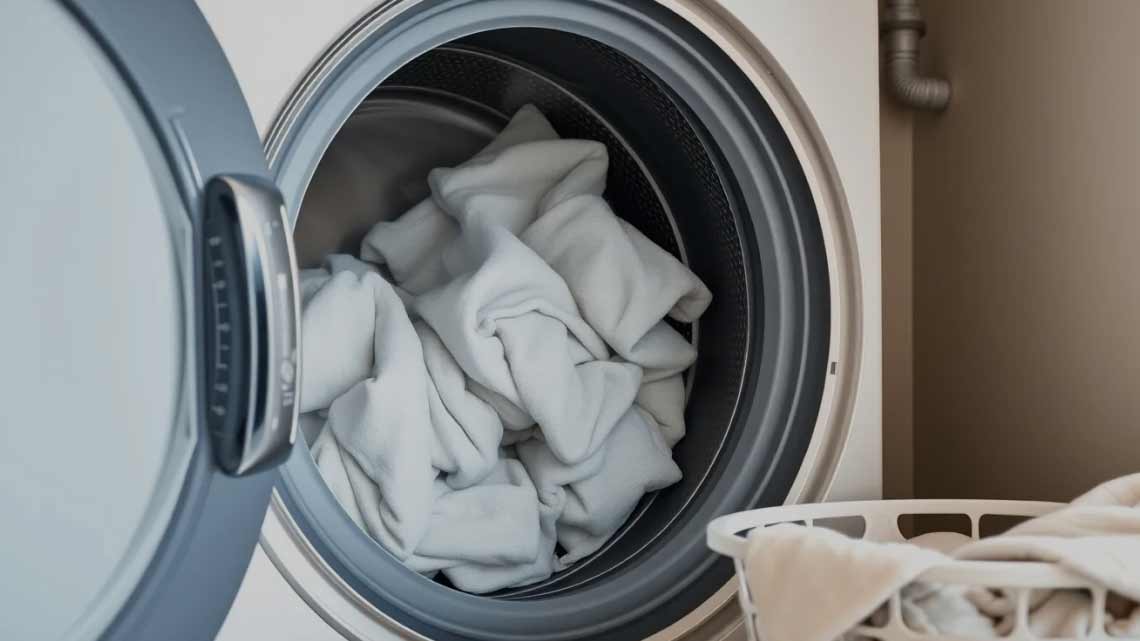
Okay, picture this. You put a load in before dinner. Come back an hour later. Clothes are… warm-ish. Still weirdly damp at the seams. You roll your eyes, press start again. Another 40 minutes. Maybe another after that. By the time you’re folding, you’re wondering if your dryer quietly gave up without telling you.
This exact scenario? It’s probably our most-called-about dryer issue at Appliance Repair Jax, especially when it comes to appliance repair Jacksonville FL calls. Folks describe it a hundred ways — “it’s getting hot but not drying,” “takes two cycles now,” “just… slow” — but underneath, the problem is almost always the same handful of things. And most of them? Fixable without buying a new machine.
Here’s the Thing Nobody Explains About Dryers
Your dryer doesn’t actually “dry” clothes. Not directly. What it does is heat air up and then yeet that air through your wet laundry, grabbing moisture along the way and blowing it outside. Two jobs, happening at once. Heat and airflow. Take one of those away and the other one just… flails around accomplishing nothing.
And that’s the thing. When a dryer takes forever to dry clothes, maybe 80% of the time it’s not the heat that’s broken. It’s the airflow. The hot part works. The blowing-it-outside part is where everything falls apart. Keep that in mind as we go — it explains most of what’s below.
Schedule your appliance repair today!
The Culprits, Ranked by How Often We See Them
1. A lint screen that hasn’t been properly cleaned ever
Hear us out. You probably pull lint off the screen after every load. Great. But here’s a trick our guys use: hold the lint screen under the faucet. If water beads up on top instead of flowing straight through? The screen is clogged with dryer sheet film. You can’t see it, but it kills airflow. Warm water, dish soap, gentle scrub — two minutes. Do it every few months. This alone fixes a scary number of “dryer not drying well” complaints.
2. The exhaust vent
Here’s where things get ugly. The duct running from the back of the dryer to outside your home collects lint — astonishing amounts of it, over years. One customer in Mandarin had us pull an actual bird’s nest out of his vent line. With twigs. Point being: if you’ve never cleaned out your dryer vent, this is almost certainly why your clothes dryer is not drying. Cleaning dryer exhaust isn’t glamorous, but it’s probably the biggest payoff of any home maintenance task nobody talks about.
3. That little flap outside your house
Go look at it. Right now if you can. The vent cover on the outside of your house — the thing with the little louvers or flap that’s supposed to swing open when the dryer runs. If it’s caked shut with old lint, sealed up by a helpful painter, or full of wasps (it happens, don’t ask), the dryer has nowhere to push air. You could clean every inch of duct inside the house and still have the same problem because of that one little flap.
4. The heating element is half-dead
This one messes with people. A totally dead heating element is obvious — clothes come out cold, nobody’s confused. But a partially shorted element? You get heat, just not enough. The dryer feels warm. Clothes come out sort of dry. Cycle finishes, but towels still feel slightly chilly in the middle. If your Whirlpool, Maytag, or Kenmore is pushing ten years old and drying has been slowly declining, put this at the top of your suspect list.
5. Moisture sensor bars that need a quick wipe
Open your dryer. Look near the lint trap opening. See those two little metal strips? Those are moisture sensors on auto-dry cycles. They read how wet the clothes are — except when they’re coated in fabric softener residue, they read everything as “dry” and the cycle ends too early. Wipe those strips with rubbing alcohol on a cotton pad. Ten seconds of work. Free fix.
6. A crushed vent hose behind the machine
Pull your dryer out from the wall (carefully). That flexible hose connecting the back of the dryer to the wall vent — is it squished flat? Twisted like a pretzel? Someone shoved the machine too hard against the wall, now the hose is pinched. Straighten it. Better yet, upgrade to semi-rigid metal ducting — doesn’t crush, doesn’t trap lint in ridges.
7. Overloading
One king-size comforter plus two sets of sheets plus “this towel, too” equals a drum that can’t tumble. Clothes need space to flop around so warm air can get between them. Stuffed full? The load just sits there being a wet lump. Half-full dries twice as fast. Don’t fight the physics.
Figuring Out Which One It Is
Try these four quick checks before anything else:
- Run the dryer, then put your hand by the outside vent. Strong gust of warm air? Vent is clear. Barely a breeze? You found your villain.
- Touch the side of the dryer during a cycle. Hot like a skillet? Heat isn’t escaping properly. That’s airflow.
- Try a timed cycle instead of auto-sensor. If the load finally dries, your sensor’s lying. Wipe the bars.
- Just dry two pillowcases. If even that takes an hour, you’re not overloading. Problem is mechanical.
Stuff You Can Fix This Saturday
Roll up your sleeves. Here’s your homework, in order:
- Deep-clean that lint screen. Warm water, soap, rinse, dry fully. Hold it up to a light before reinstalling.
- Vent brush through the entire duct. Disconnect the hose behind the dryer, attach a dryer vent brush to a drill, and snake it from inside out. Vacuum what falls. You’ll be horrified. In a satisfying way.
- Check the exterior flap. Clean it. Make sure it moves freely. If it’s broken, they’re cheap to replace.
- Wipe the sensor bars. Rubbing alcohol on a cotton pad. Ten seconds.
- Swap the flexible hose if it’s vinyl. Metal ducting costs under $20 and lasts forever.
When You’ve Done Everything and It’s Still Slow
At that point — vent cleaned, screen spotless, sensors wiped, hose replaced — and it’s still molasses slow? You’re looking at a component issue. Partial heating element failure. Stuck cycling thermostat. Tired blower wheel. These jobs need a multimeter and knowledge of which wire connects where. Doable DIY if you’re mechanically inclined. A pain if you’re not.
This is where a high-rated appliance repair company earns its keep. A tech who’s done this five hundred times walks in, runs the right tests, and knows within about ten minutes which part is the issue. No guessing. No buying parts you didn’t need.
If You Just Want It Handled
When our Appliance Repair Jax techs show up for a long-drying call, we run the full chain. Vent airflow. Heating element resistance. Thermostat function. Moisture sensor reading. Blower wheel. Drum seal. Anything that could be slowing things down gets tested. Parts for every major brand live on the truck, so most repairs wrap up same visit.
If you’re shopping around for Jacksonville appliance repair specifically for a dryer that’s dragging its feet, this is exactly what we do all day. Whirlpool, Maytag, Samsung, GE, LG, Kenmore, Frigidaire — nothing we haven’t seen.
Name: Appliance Repair Jax
Adress: 164 Johns Glen Dr, Jacksonville, FL 32259
Phone: (904) 200-4110
Website: https://appliancerepairjax.com/
Conclusion
Most “dryer takes forever” complaints come down to airflow you can restore yourself.
- Clean the screen.
- Clean the vent.
- Wipe the sensors.
- Uncrush the hose.
Already did all of that and nothing changed? Fine — time to call in the cavalry. If you’re in Jacksonville and you’d rather skip the Saturday project, Appliance Repair Jax is around the corner.
More Articles on Dryer Repair
- Dryer Not Drying Clothes Properly? Here’s Why
- Dryer Smells Like Burning — Causes & When to Worry
- Dryer Won’t Start? Check These 6 Things First
- Dryer Not Spinning: Causes and What to Do
- Dryer Thermal Fuse Replacement: When and How to Do It
- Dryer Squeaking? What It Means and How to Fix It
- Dryer Belt Replacement: Step-by-Step Guide
- Dryer Heating Element Replacement: DIY or Call a Pro?
- Dryer Not Heating? 7 Common Causes & How to Fix Them
